
Charles and Maurice Prendergast -brothers and artists
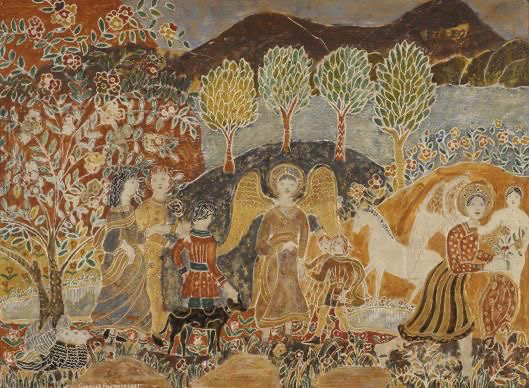
Charles Prendergast
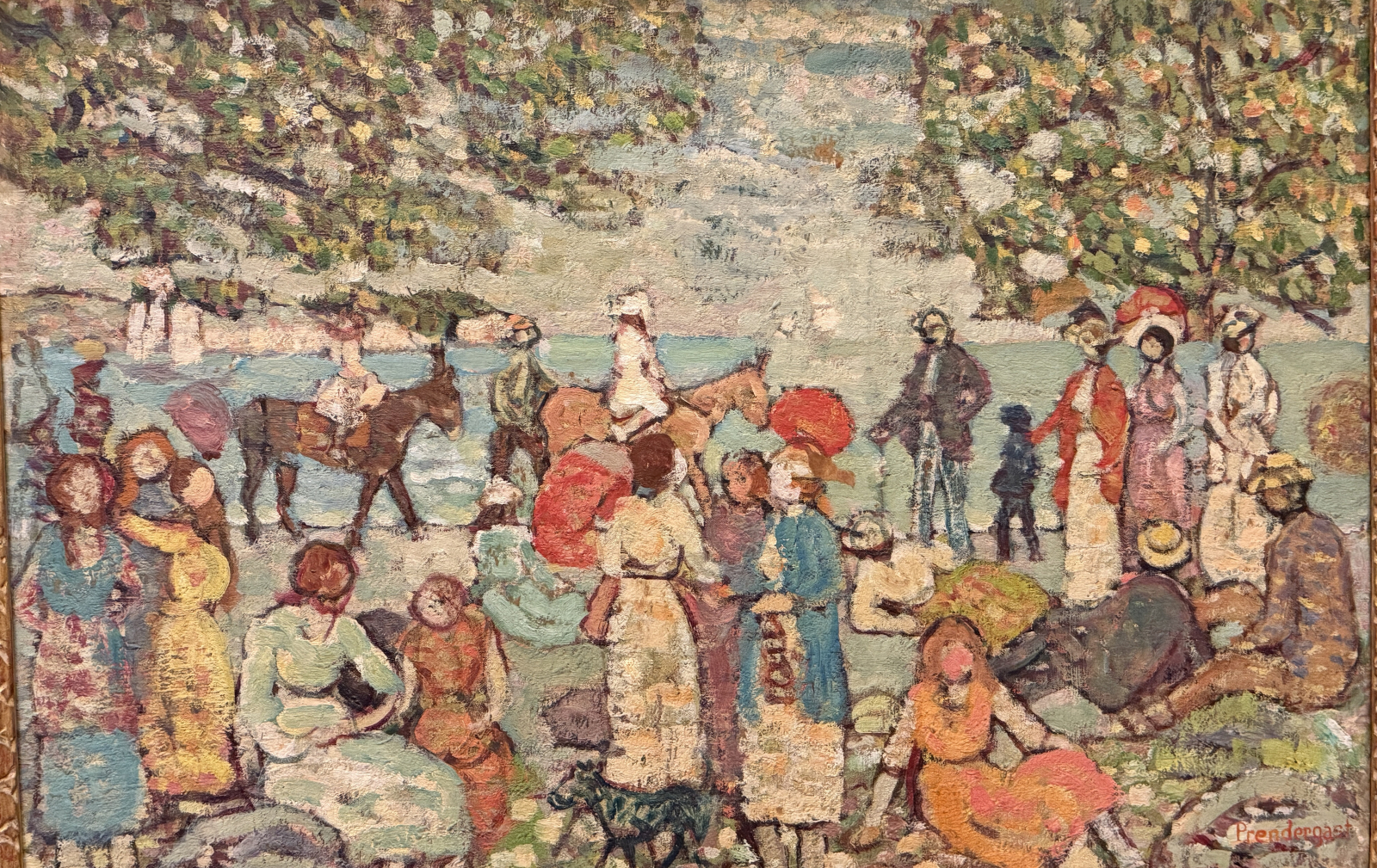 Maurice Prendergast
Charles and Maurice Prendergast -brothers and artists
Charles Prendergast -Born St. John’s, Newfoundland 1863-died Norwalk, Connecticut 1948
Maurice Prendergast - Born St John’s, Newfoundland 1858- died New York City 1924
I love sharing art that moves me. I always get excited when I discover artists that aren't as well know (at least to me.) Finding them at The Barnes Foundation was such a treat. On further research I found that Williams College Museum of Art (WCMA) holds spproximately 400 pieces. They are located in Williamstown, Mass.
I recently went to the Barnes Foundation in Philadelphia for the 2nd time. I blogged about the foundation a couple months ago. Such a unique place to look at work. It’s a bit overwhelming at first, but then your eyes and mind adjust and the brilliance of the displays takes over. There was one painter in particular that caught my eye, Charles Prendergast. Of all the marvelous paintings hanging in this one room, my eye went to his painting.
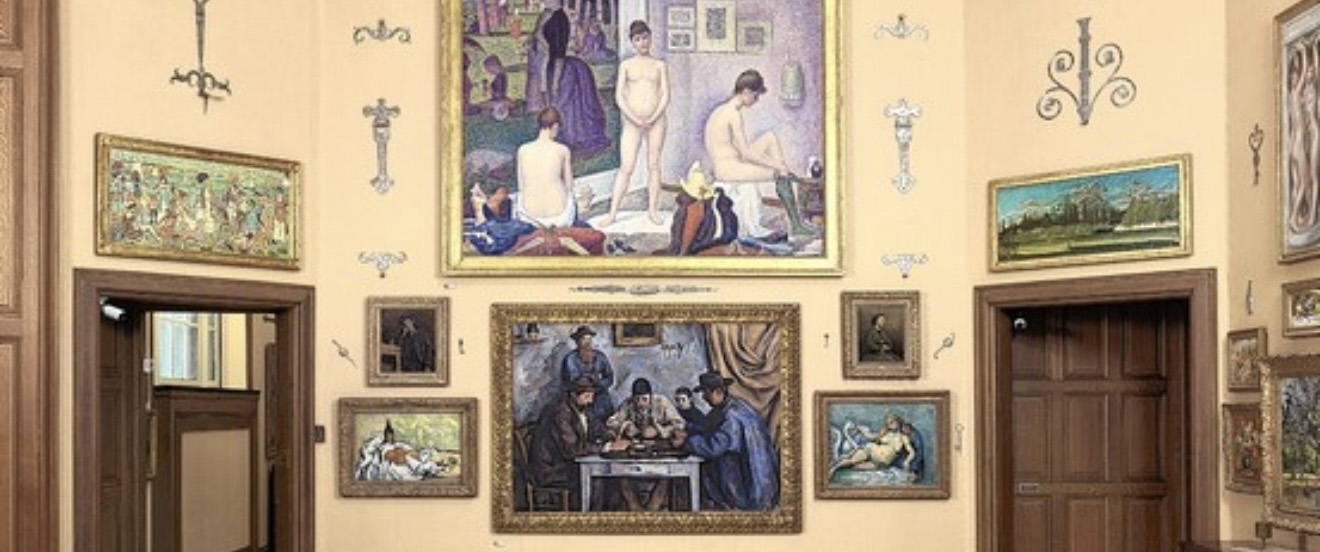
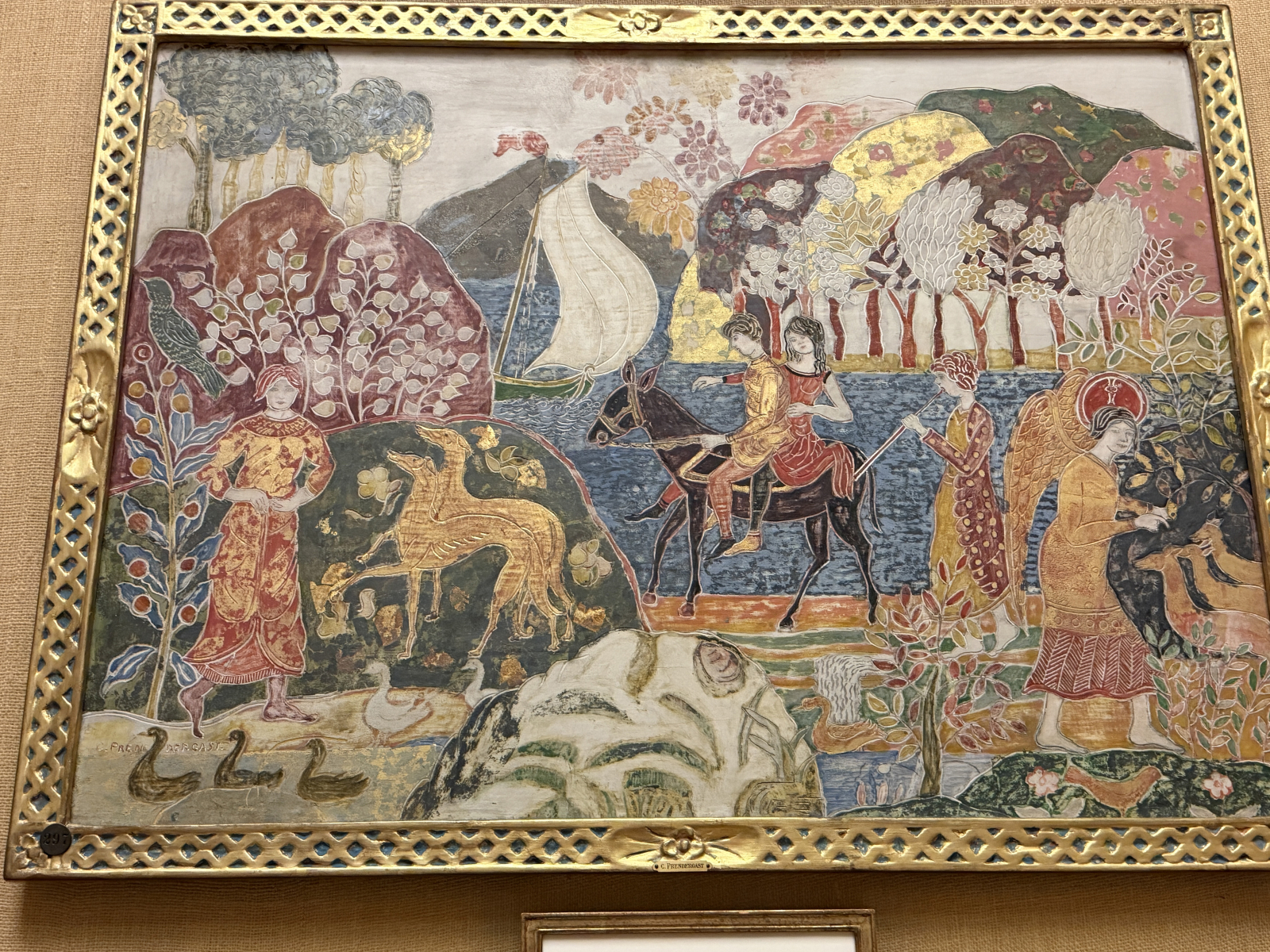
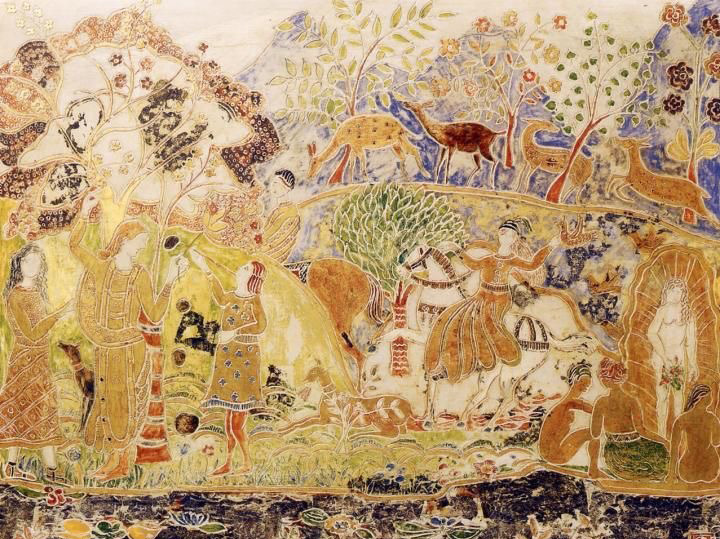
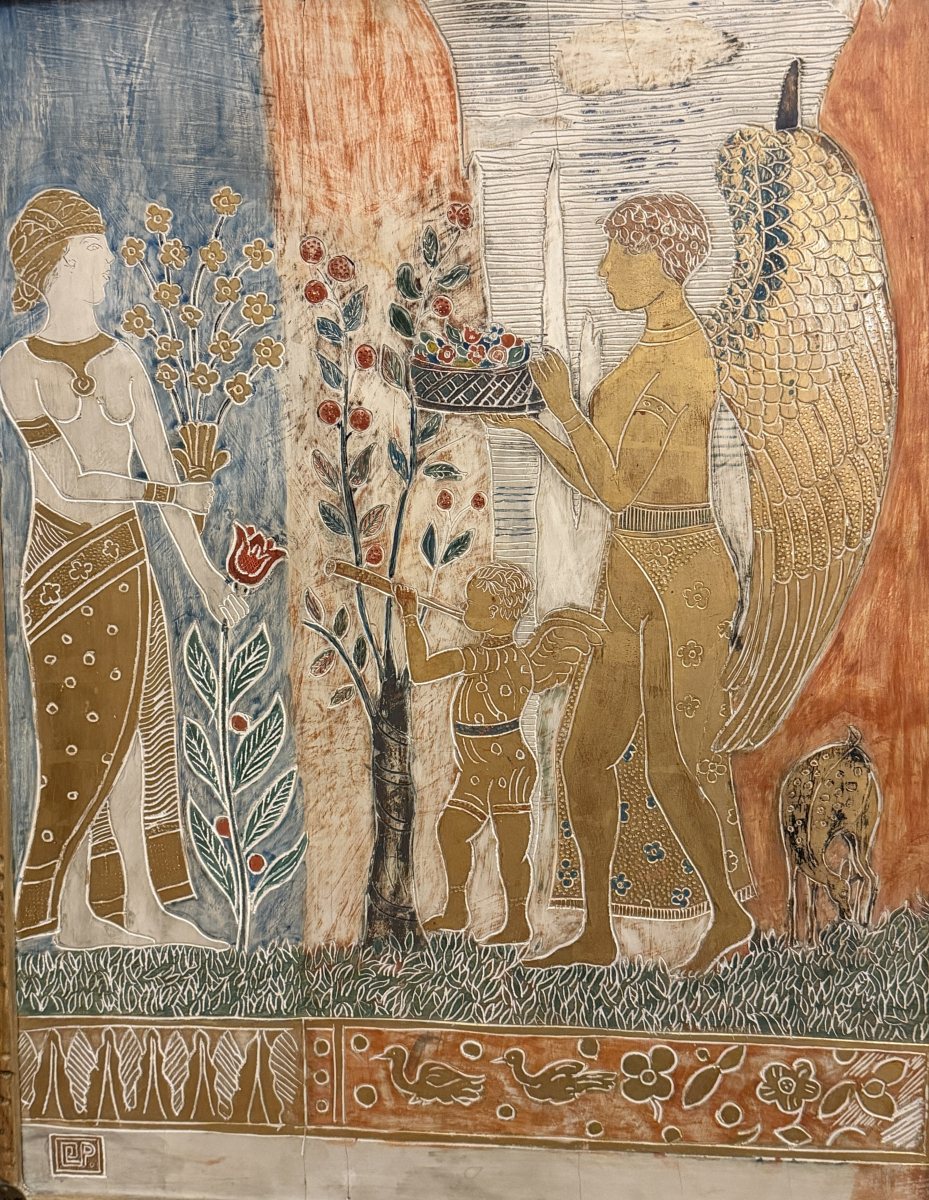
It was a painting, but there was something unusual going on; he carved into the painting. So what was this technique? With further research, I discovered his approach. These were hand-carved wooden panels covered with gesso, with tempera and gold leaf in a flat, decorative, almost primitive style.
Charles Prendergast carved and incised these panels to create low-relief surfaces. He then coated the panel with gesso, building up a smooth, slightly textured ground that could be painted and gilded.
Unlike traditional canvas painting, his works are more like relief panels, combining the methods of carving, framing, and painting into a single object. This approach grew out of his earlier career as a master frame maker; he essentially turned the decorative frame into the painted surface itself.
Charles
He painted these gessoed panels with tempura and oil, using bright, flat colors and simplified outlines. His style is deliberately “naive” or “primitive,” with flattened perspective, exaggerated forms, and a rhythmic, patterned composition.
Gold leaf plays a key role; he applied it to backgrounds, halos, and decorative borders, recalling medieval and Byzantine sacred panels. The gold gives the images a luminous, timeless quality, tying his work to the spirit of Italian and Eastern Christian art he admired in museums.
Prendergast’s technique was shaped by his deep study of historical sources, including medieval reliefs, Italian sacred panels, and Persian and Chinese miniatures . He borrowed motifs like angels, Madonnas, and courtly scenes, but simplified and stylized them into dreamlike fantasy scenes.
His frames and panels also show the influence of the Arts and Crafts movement, with their emphasis on handmade, rustic craftsmanship and a stripped-down, decorative aesthetic. He often used asymmetrical, simplified floral and scroll patterns, and his gilding was deliberately uneven to look antique and handcrafted.
Charles
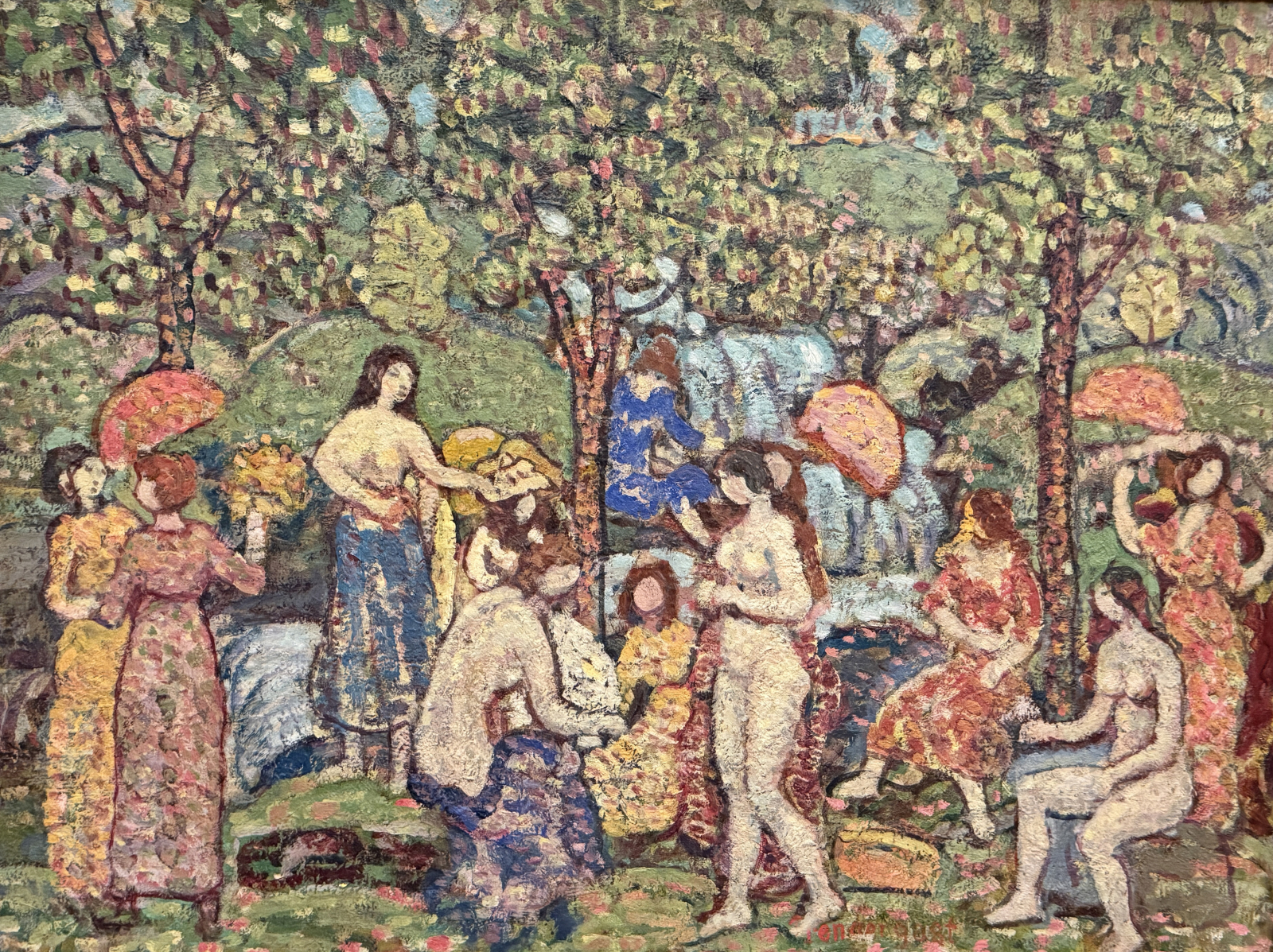
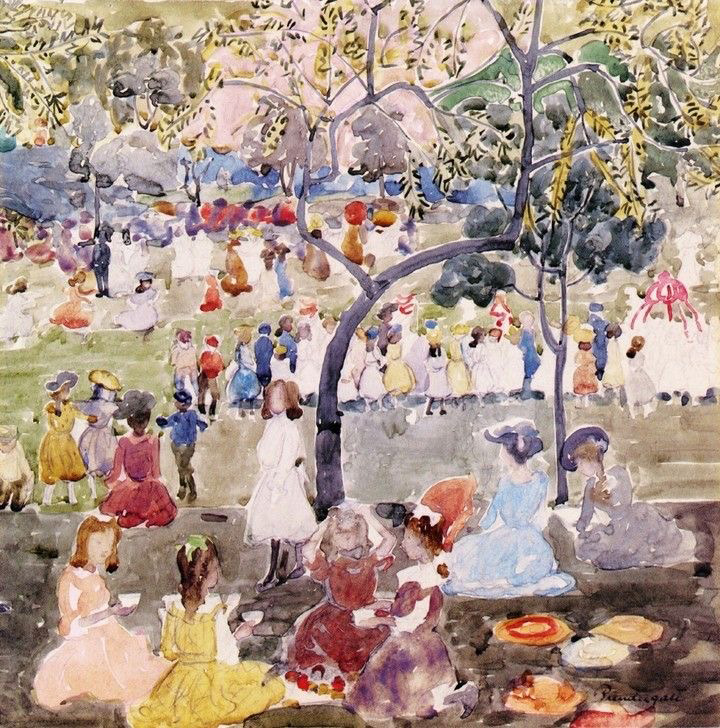
Now there were some other paintings that caught my eye. They were similar in that they had this same flattened perspective and similar colors. At first I thought it was the same artist only to find out it was his brother Maurice who painted them! They were both Post-Impressionist artists. Maurice Prendergast worked almost entirely in paint: watercolor, oil and gouache on paper or canvas. His style is characterized by mosaic-like patches of color, rhythmic patterns of figures and landscape, and a flat, decorative surface reminiscent of Seurat and Cezanne and his brother Charles.
Maurice’s paintings are urban and seaside scenes of leisure: parks, beaches, harbors, and boulevards filled with strolling figures in bright dresses and hats. His compositions are tightly packed, rhythmic, and often abstracted, with flattened space and strong emphasis on pattern and color harmony, just like his brothers.
Maurice
Maurice
Both brothers were intensely devoted to color and ornament, treating the surface of the picture as a rich, decorative field. Maurice’s Post-Impressionist style is famous for its mosaic-like patches of bright, flat color, almost abstract patterns.
Charles translated this love of pattern into his own medium; he filled his carved tempura panels with dense floral motifs, repeated figures, and sinuous lines, all glowing against gold leaf backgrounds. In both cases, the goal was not photographic realism, but a heightened, decorative world where color and design create their own kind of truth.
The brothers shared a studio and lived in the same artistic circles in Boston and later New York, and their work shows clear moments of mutual influence. For example, both painted scenes of bathers at the waterfront, and Charle’s later compositions often echo the flattened space and rhythmic silhouettes of Maurice’s figures.
Charles
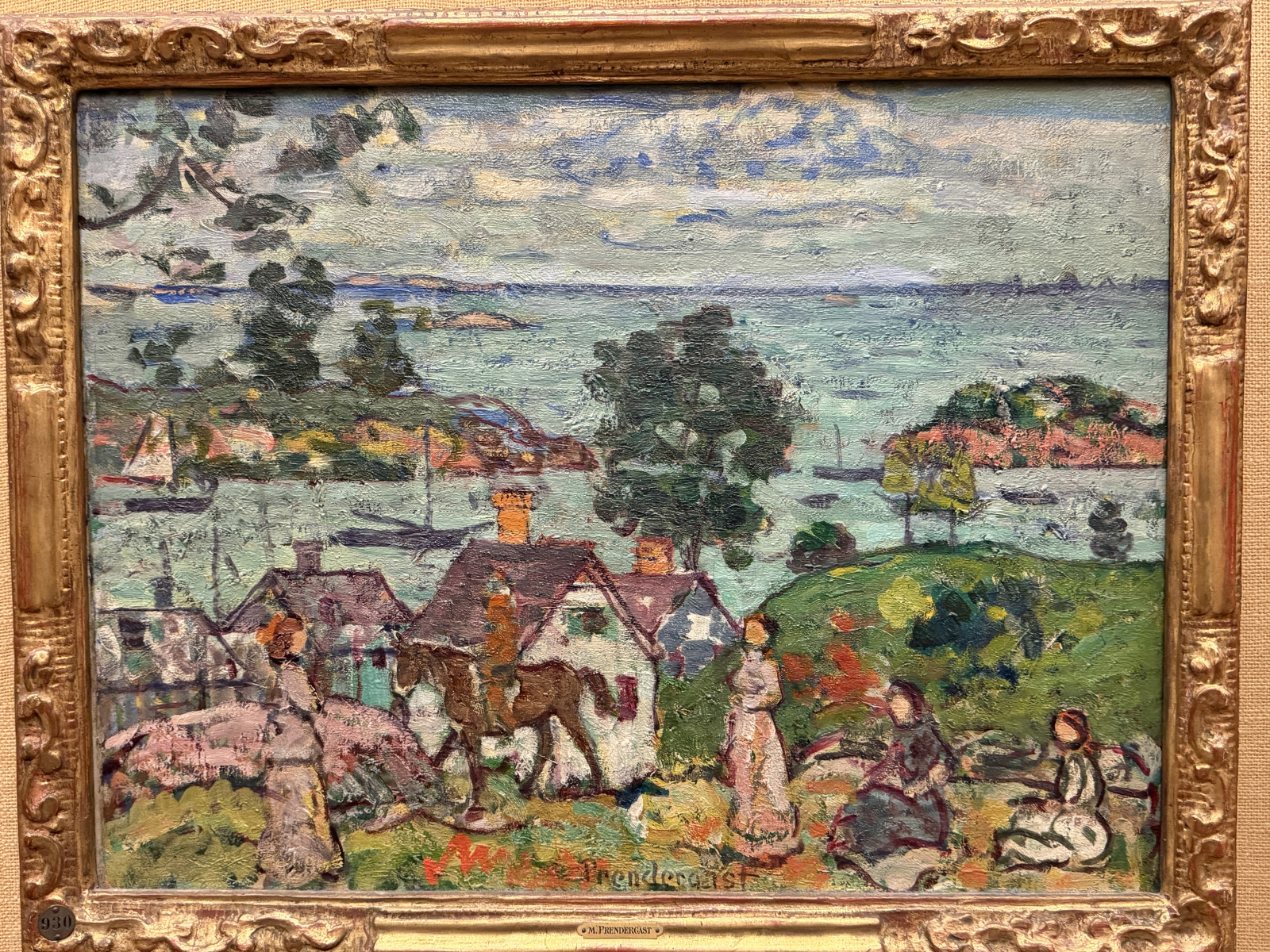 Maurice
They also shared patrons and friends in the world of American modernism like Albert Barnes, and both were recognized as independent spirits who followed their own paths rather than conform to any school. This deep artistic kinship - expressed in different media and styles - makes their work particularly rewarding to view side by side.
Where to see their work:
The Barnes Foundation, Philadelphia https://collection.barnesfoundation.org/
WCMA (Williams Collage Museum of Art) , Williamstown, MA. They have a very extensive collection of their work
https://artmuseum.williams.edu/collection/prendergast-archive/
National Gallery of Art, Washington DC https://www.nga.gov/?gad_source=1&gad_campaignid=23225053626&gbraid=0AAAABBBT5I2PnqH6rpjopECha_y_q7rOJ&gclid=EAIaIQobChMIwsXX0oS5kgMV5yXUAR1n1y49EAAYASAAEgK_F_D_BwE


