
My Art Journey with Anselm Kiefer
As it turns out, I've been following Anselm Kiefer for more than 30 years, including very closely over the past three years. I can recommend him to you as a significant current artist. Here's a little bit about this astonishing man. He's truly larger than life!
I was first introduced to Kiefer in Los Angeles in 1980, when he had an exhibit downtown. I attended without knowing anything about him, and I was immediately struck — really overwhelmed — by both the size of his artwork — its gigantic scale, often taking up an entire wall, reaching 30 feet in the air, etc. — and by its subject matter. It seemed like I was viewing something about war, the apocalypse, or dystopia. And in a sense, I really was.
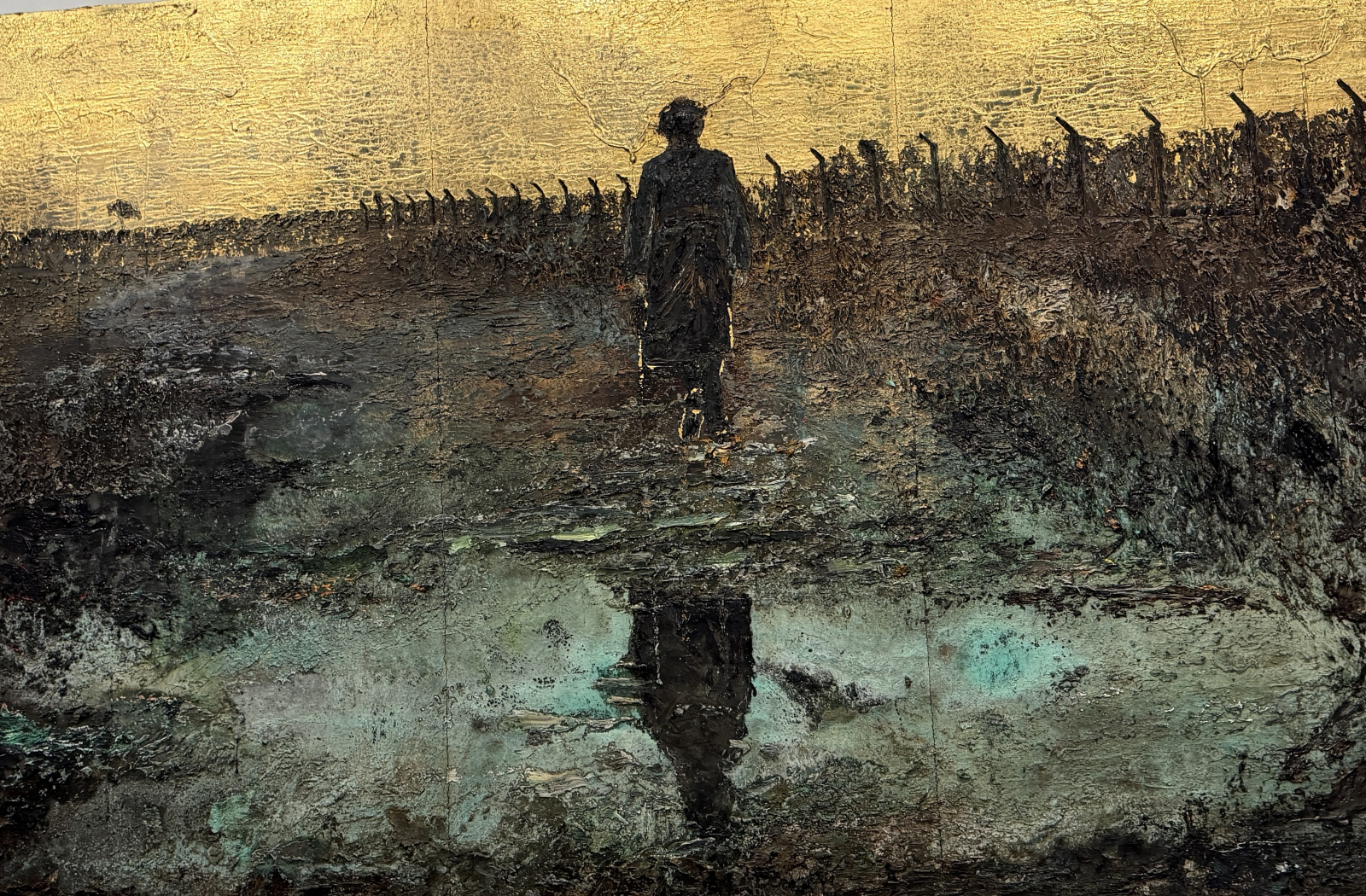
Anselm Kiefer, St. Louis
Over the past years, I've watched two documentaries about him that came out in 2023, see the notes below, I've traveled to Amsterdam to see a giant exhibition he created for two museums there, and I've recently come back from St Louis, where he made another exhibition for the St Louis Art Museum. In addition, over the last year, he's had exhibits in Japan, London, and Oxford, England. And all this, from a guy who turned 80 this year! Kiefer was born in the very last month of World War II in Germany; he was born in a hospital that was bombed by the Allies the day he was born. His mother gave birth to him in the basement of the hospital, and on the same day of his birth, the place where they lived was destroyed by Allied bombing. He grew up amid rubble, destruction, and the signs of a nation utterly conquered. Kiefer, however, had fond memories of playing among the rubble and creating buildings out of the broken bricks. To him it wasn’t destruction; it was a new beginning, a rebirth to something better.


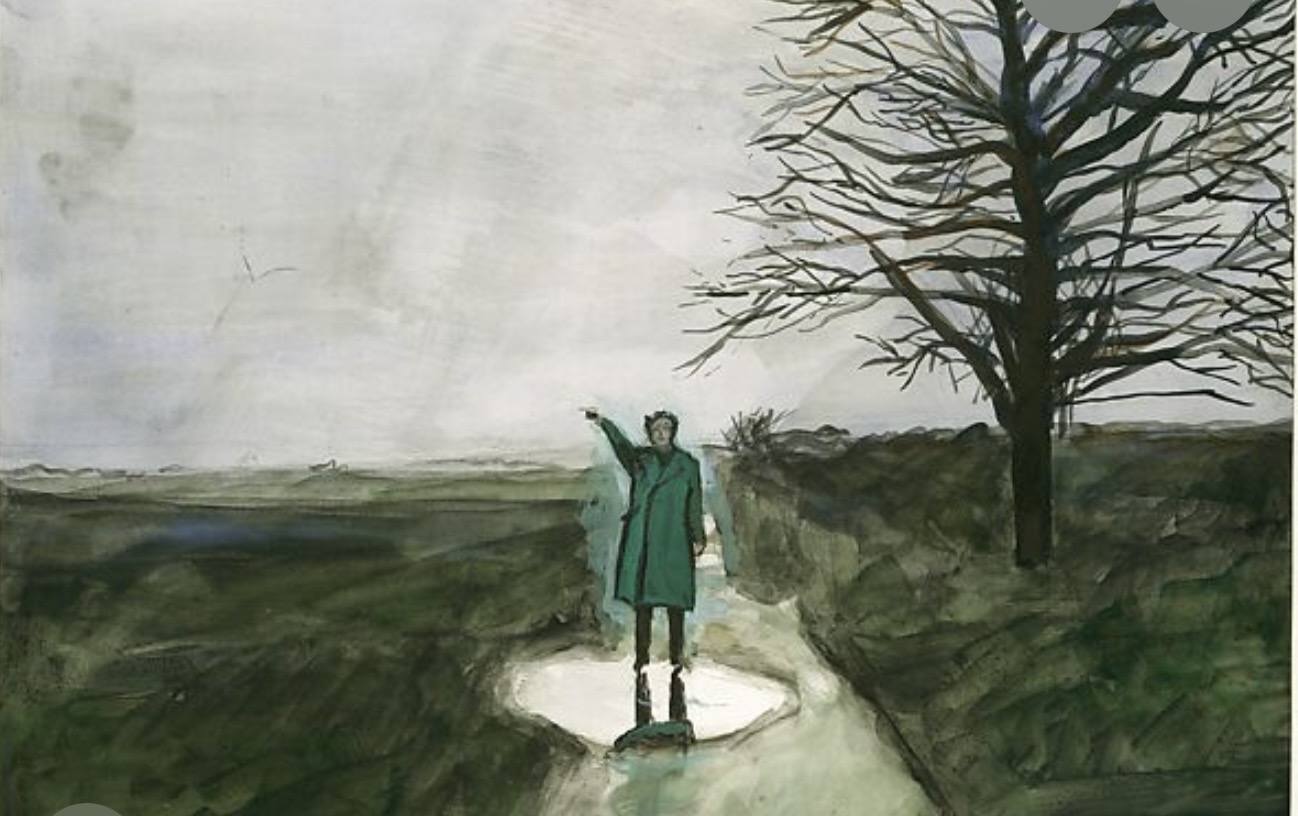
Kiefer also grew up in a Germany that was working very hard to ignore its past, to downplay its history of militarization and aggressive war, and obviously its Nazi roots. Although his father was in the German army during World War II, he did not emphasize this part of his background. Anselm began working as an artist very young, and he was awarded a special scholarship that allowed him to travel. He chose to follow Vincent Van Gogh's route from the Netherlands into France, and he visited the locations Van Gogh had visited. And so, Van Gogh remains a significant influence in his life. In 1969, Kiefer traveled around Europe, posing for photographs at central locations while wearing his father's German military uniform (and sometimes performing the Nazi salute). Needless to say, this was highly controversial in his home country of Germany, and he received mixed reactions. Although Kiefer was accused of being a modern Nazi, he firmly stated he was only trying to point out Germany's complicated relationship to its past.
In the early 1980s, Kiefer began to break out and exhibited in Amsterdam, Los Angeles, St. Louis, Philadelphia, and Chicago. He was becoming well known outside of Germany. At one point, he made his home and studio in a former brick factory in Germany.
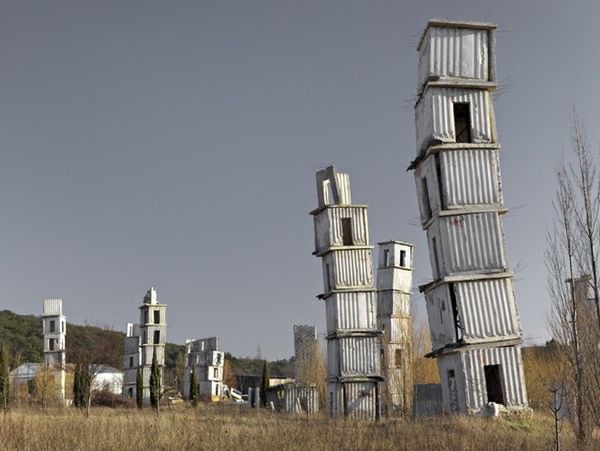
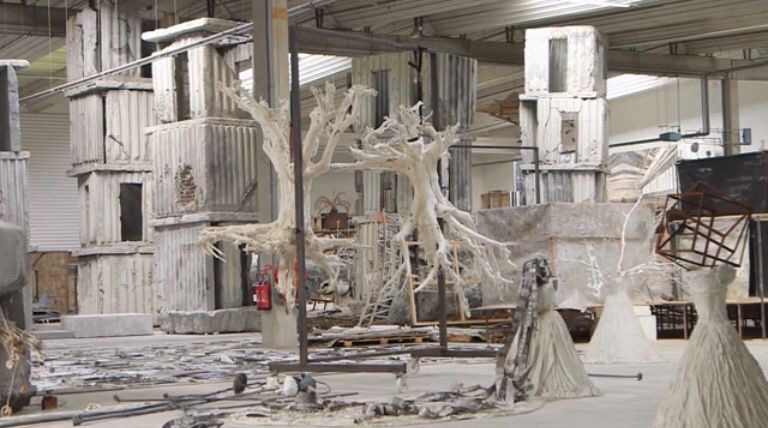
And later, he would leave Germany for France, where he felt more welcome. He eventually ended up in Barjac, France, in Provence, and bought an abandoned factory and a site for silk production. In that location, he built his own village, including art installations and pieces that looked like small skyscrapers or buildings. He also constructed several pieces in the form of dresses, honoring women and recognizing the unrecognized. Eventually, he would move to the Paris area, where he lives today, and work.
And his works are massive, powerful, and he is prolific. At 80, he demonstrates no signs of slowing down. For example, a piece of his work might be 30 feet tall and 60 feet long, and it might include paint, straw, wood, metal, and other materials he has put into the surface, sometimes burned and partially destroyed. It's too simplistic to say that it is a canvas he's painted on. Sometimes he will treat the canvas or medium with chemicals or electrolysis. And he has designed a way to generate and create a new type of verde green patina.
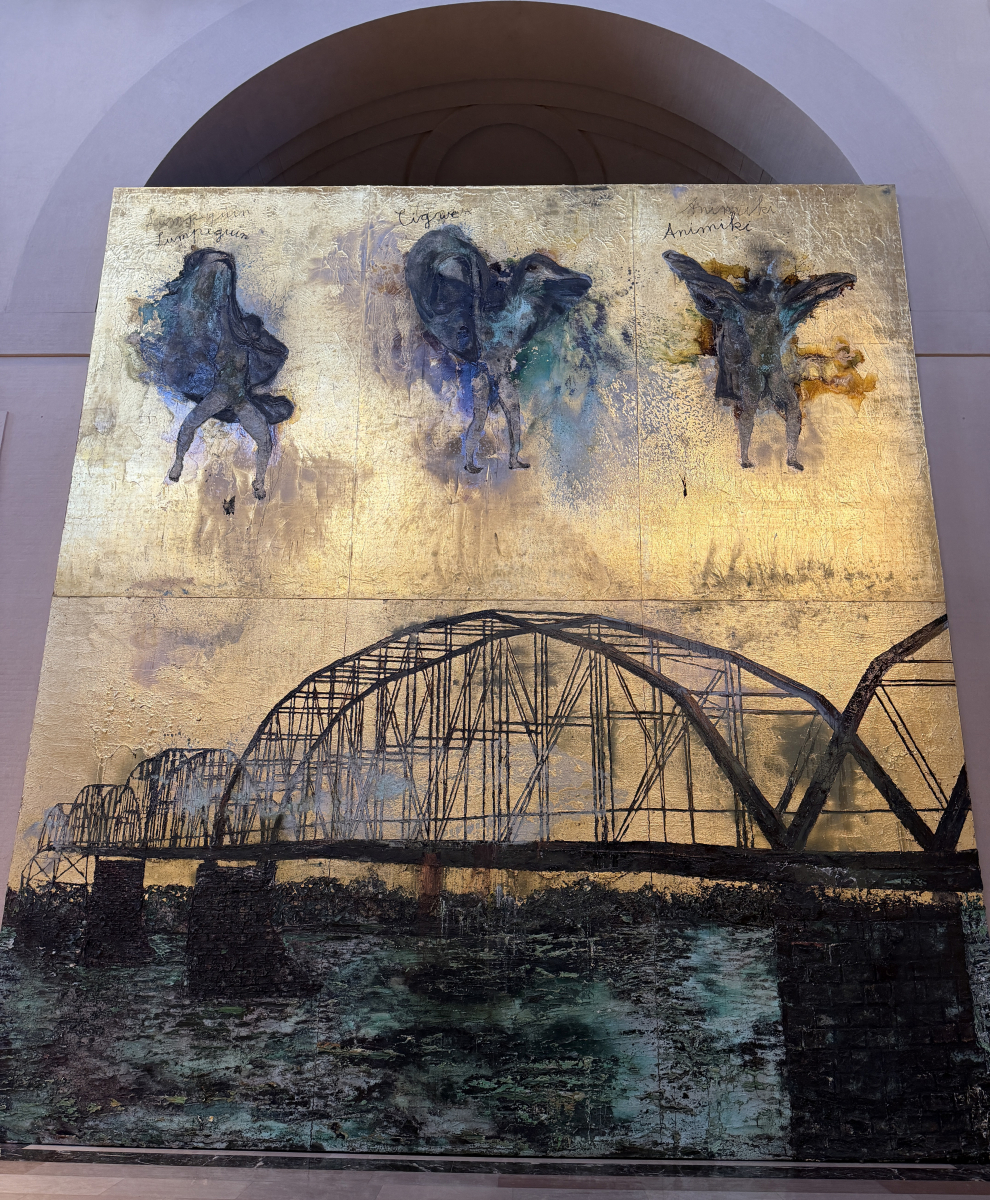
He has made paintings about the death camp at Auschwitz, about scenes from the Bible, about the ruined German parliament building, the Reichstag, in Berlin, and other monuments, both existing and demolished. For example, the recent St. Louis exhibit, which runs until January 2026, includes a gigantic piece honoring an abandoned bridge spanning the Mississippi River.
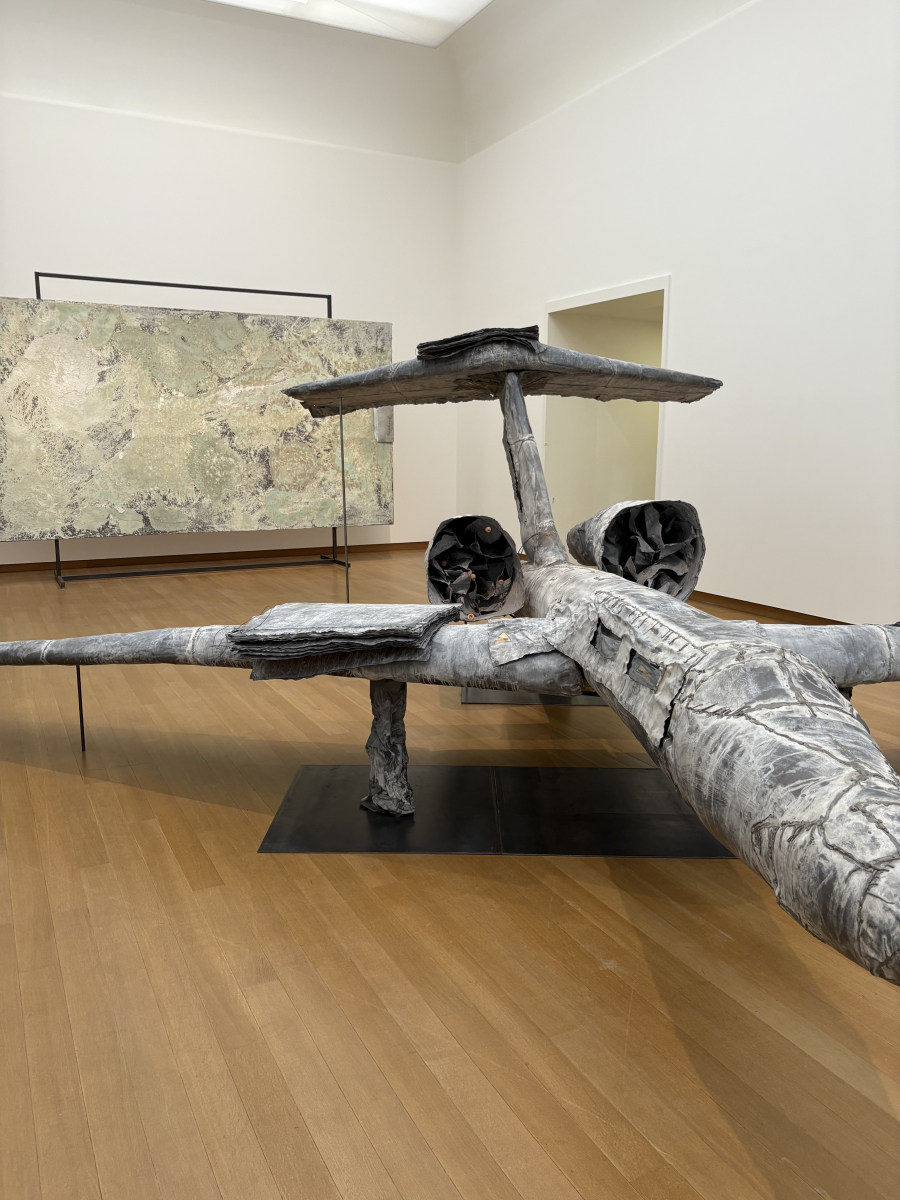
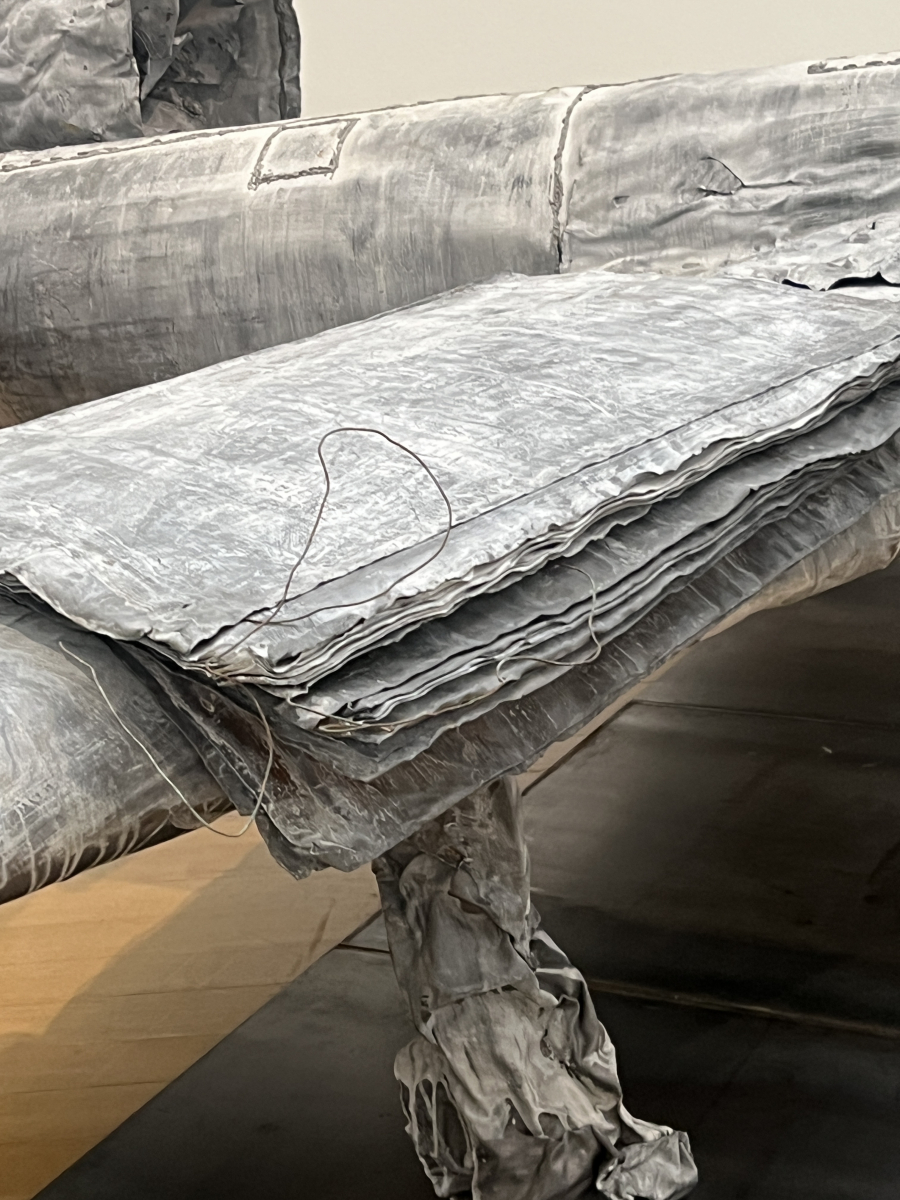
Kiefer has also used lead as a material many times in his pieces. He likes using lead because it is pliable, melts at a low temperature, and, he says, can withstand the pressure of time and history. For example, he created a jet —a small airplane —from lead. He's made books from leading sheets and pages. He creates molten lead by melting the metal in a crucible often within his large studio spaces, and then uses it as a dynamic material for his artworks. He typically pours the hot, liquid lead directly onto the surface of canvases sometimes splattering it, and later manipulates it further by ripping, peeling or partially removing sections to create unique effects and textures.
Kiefer’s use of molten lead is both physical and metaphorical. He values lead’s mutability, symbolism in alchemy, and its ability to transform a surface through destruction and elevation. The actions-pouring, peeling, burning and tearing are chosen for their visual results and also for their resonance with philosophies relating to transformation, spirituality and history.
Now to the exhibitions I saw this past year….
Anselm Kiefer’s 2025 Amsterdam exhibition, titled “Sag mir wo die Blumen sind” (“Where Have All the Flowers Gone?”), represents a landmark collaboration between the Van Gogh Museum and the Stedelijk Museum Amsterdam, specifically highlighting Kiefer’s lifelong artistic engagement with Vincent Van Gogh. This is the first time the two institutions have joined forces to showcase the deep dialogue between Kiefer and Van Gogh, a relationship rooted in both personal inspiration and visual language.
The exhibition is structured as a dual-site event, with both museums displaying Kiefer’s major works, accompanied by selected pieces by Van Gogh that trace their resonances and points of contact. The Van Gogh Museum’s portion places seven key Van Gogh works in conversation with major Kiefer paintings, new installations, and early drawings, outlining Van Gogh’s influential role throughout Kiefer’s sixty-year career.
The Stedelijk Museum showcases all of Kiefer’s pieces from its collection for the first time together, alongside new, previously unexhibited works, many reflecting Van Gogh’s influence on themes of war, memory, nature, and artistic expression.
Kiefer’s fascination with Van Gogh began in his youth. In 1963, at age 18, Kiefer retraced Van Gogh’s journey from the Netherlands through Belgium and France, a formative act that set the tone for his future explorations of landscape, color, and existential struggle. The exhibition’s title, drawn from the anti-war song “Where Have All the Flowers Gone?” by Pete Seeger, signals both artists’ concern with transformation, cyclical nature, and the after effects of destruction, all core themes in both their oeuvres.
Monumental landscapes by Kiefer are juxtaposed with Van Gogh’s “Wheatfield with Crows” (1890), emphasizing their mutual use of turbulent skies, expressive brushwork, and symbolic subjects like sunflowers and crows. New Kiefer works, such as “Sag mir wo die Blumen sind” and installation pieces, stand as poetic meditations on war, memory, and nature, linking the personal with the universal in a visual dialogue with Van Gogh’s canvases. The exhibition not only celebrates Anselm Kiefer’s 80th birthday but also serves as a testament to the ongoing dialogue between generations of artists grappling with memory, trauma, and the relentless beauty of the natural world.This unprecedented presentation invites visitors to consider how Van Gogh’s visionary work continues to shape and provoke artistic creation in the presents.
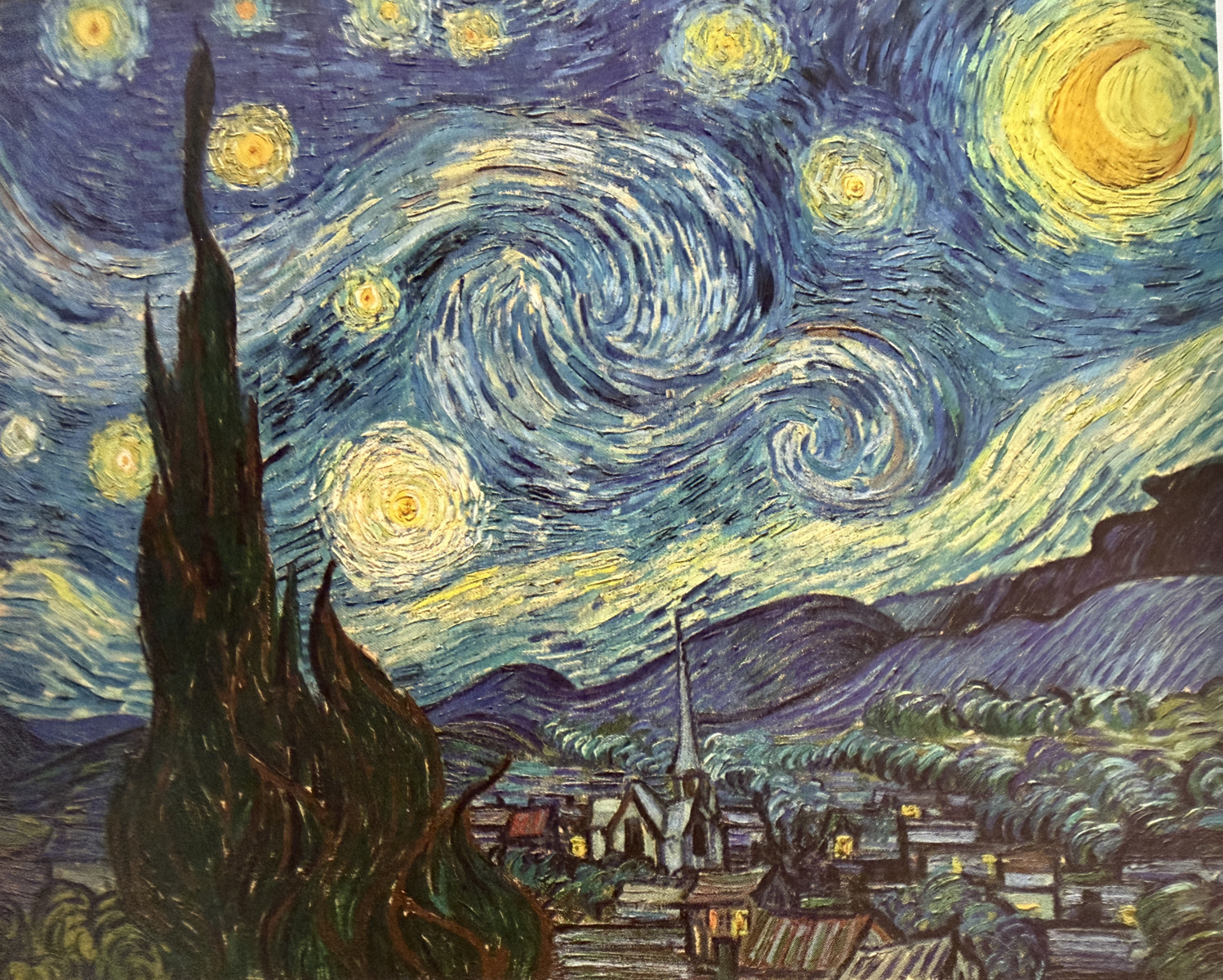
Vav Gogh's Starry Night
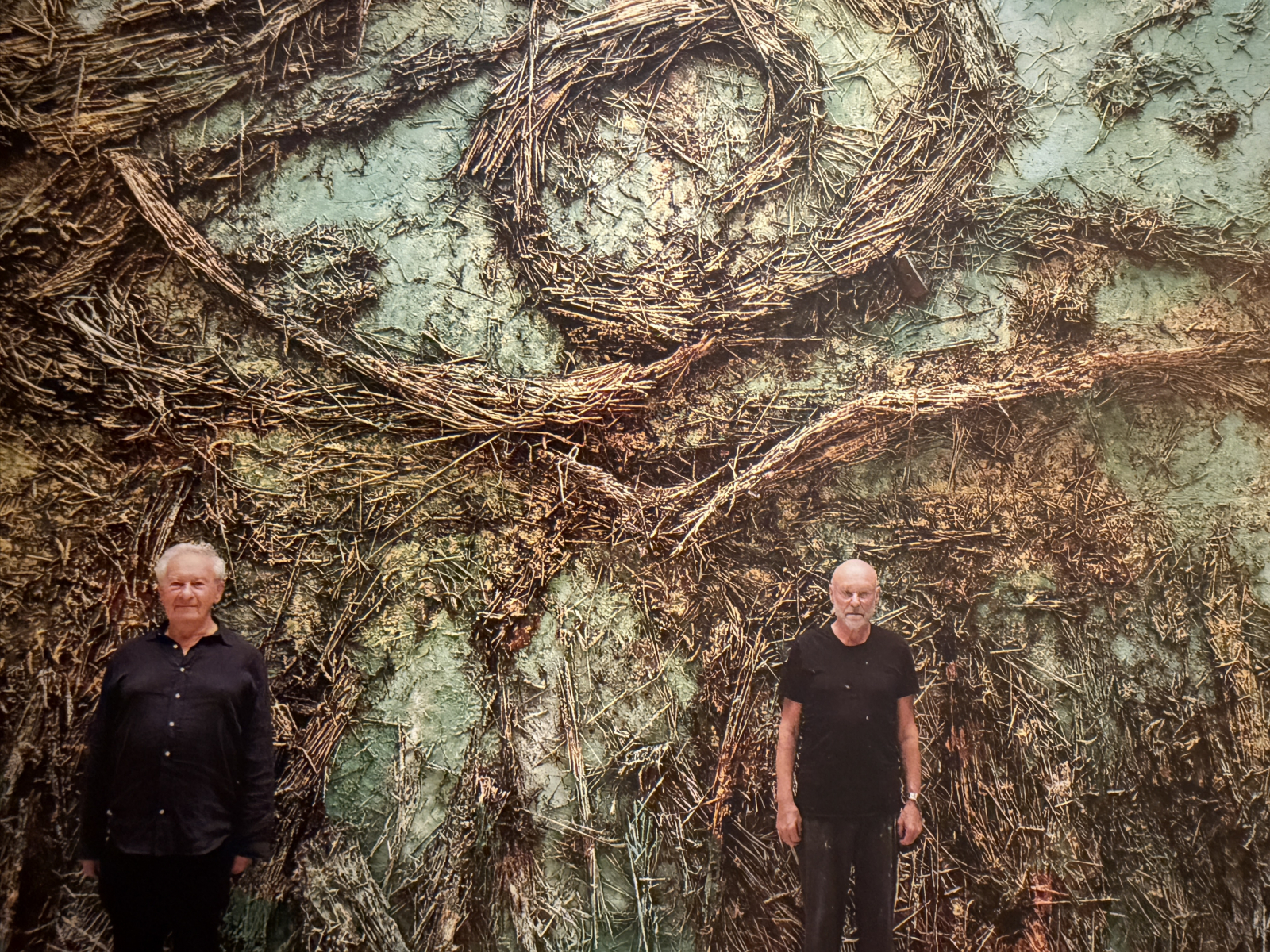 Anselm Kiefer's Starry Night
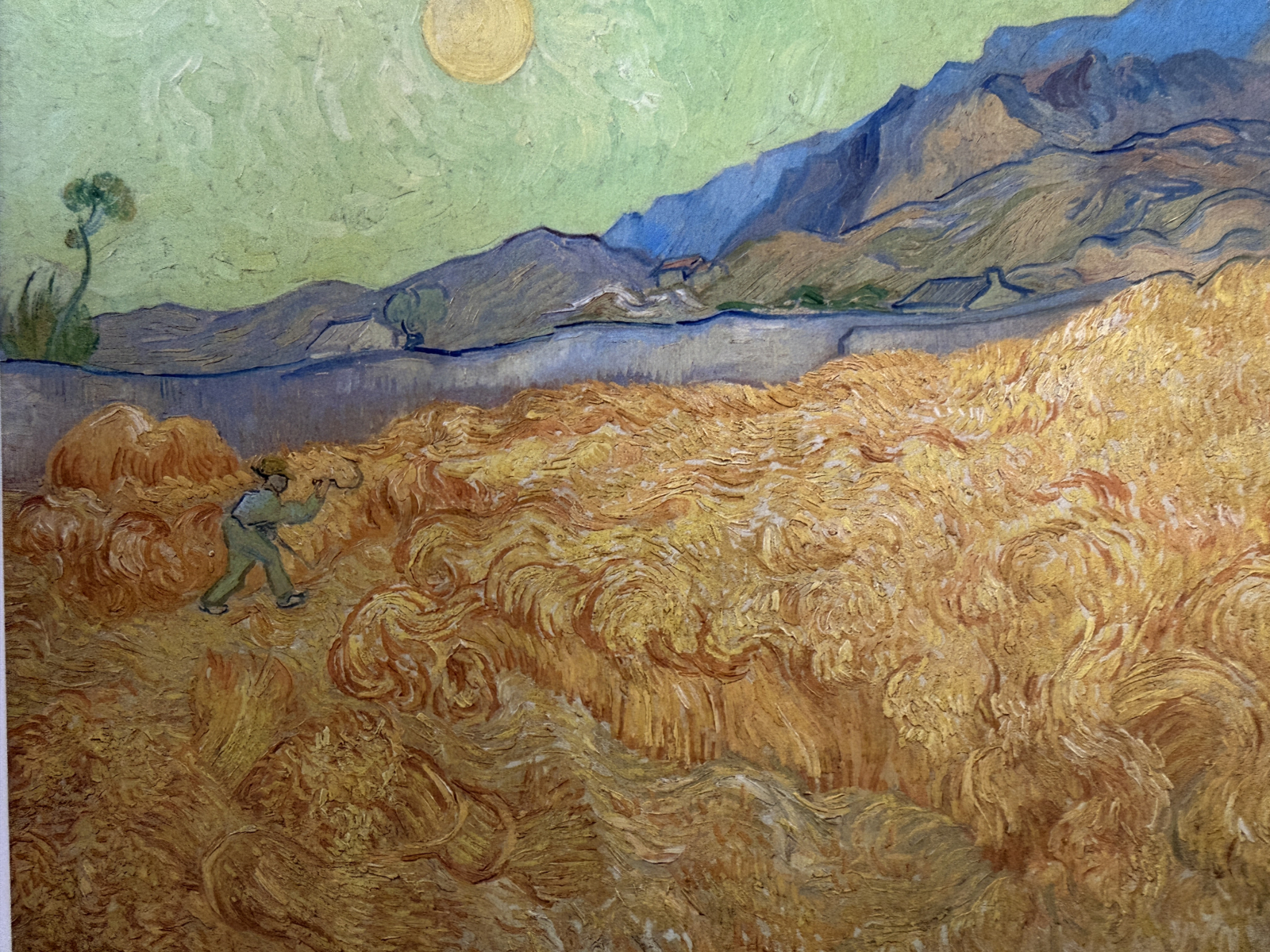 Van Gogh's Reaper
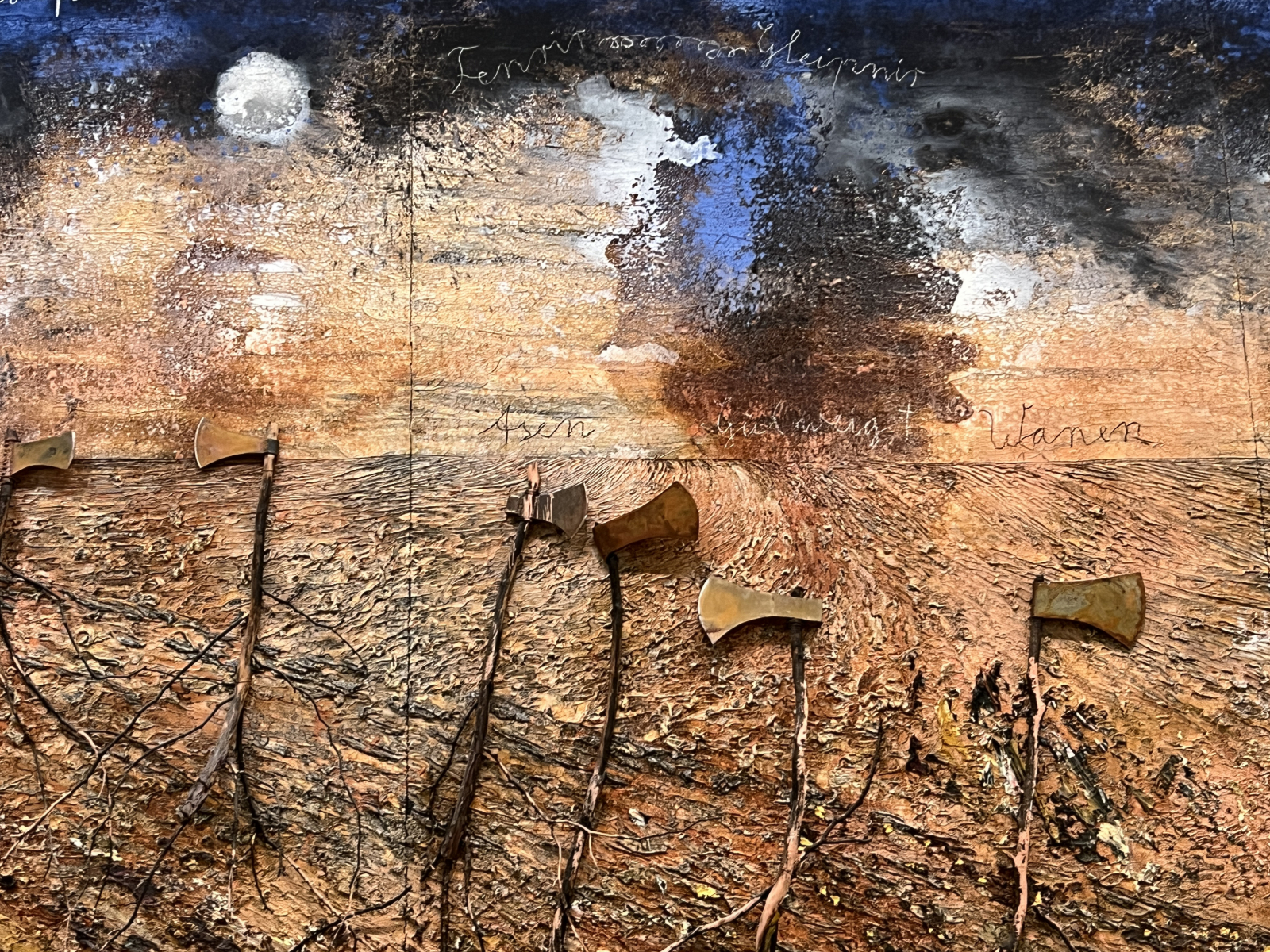 Anselm Kiefer's Reaper
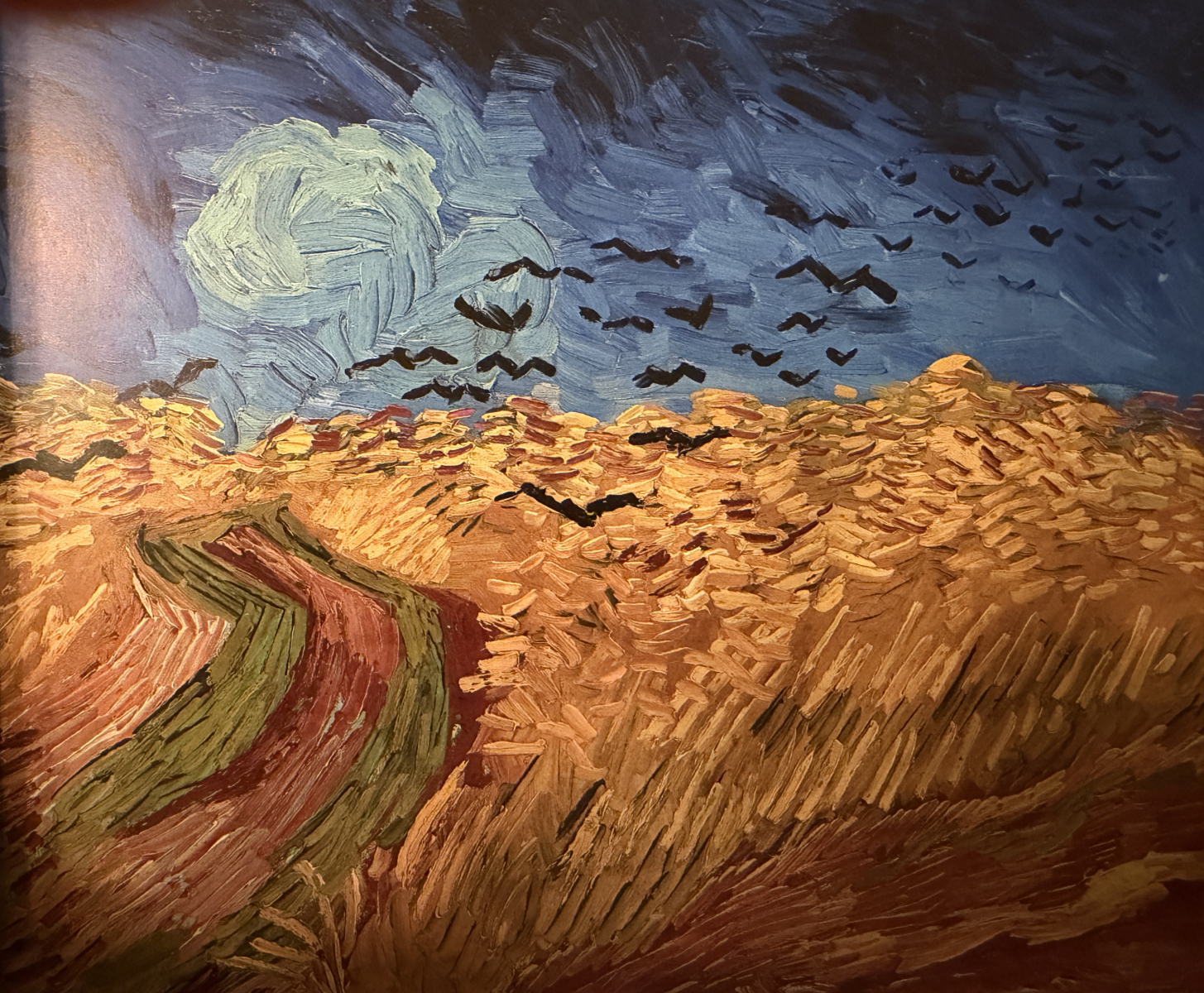
Van Gogh's Crows
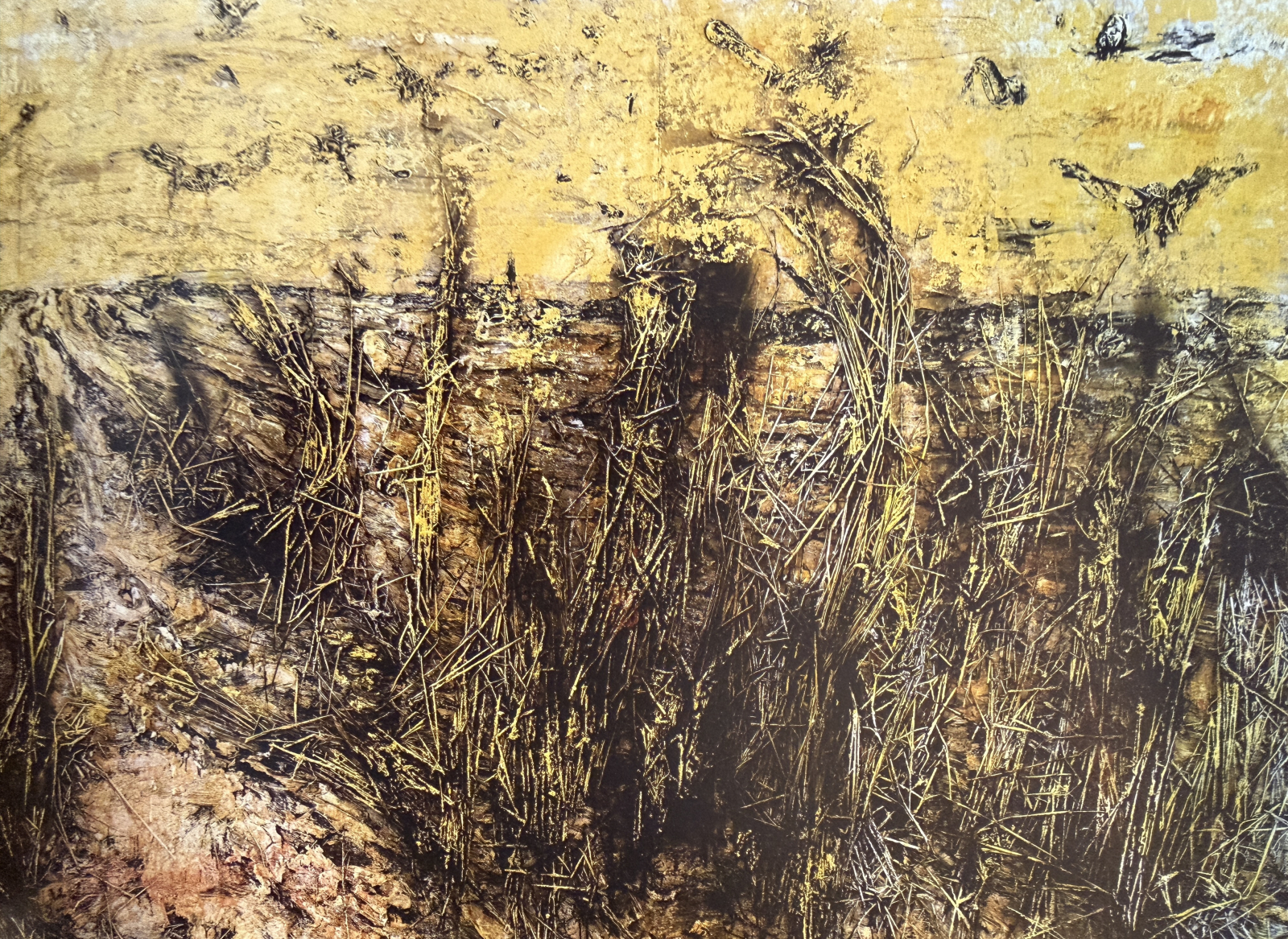 Anselm Kiefer's Crows
BECOMING THE SEA EXHIBIT IN ST. LOUIS
It is the title of a major Anselm Kiefer exhibit at the St. Louis Art Musuem and a core theme in his art, inspired by poet Gregory Corso's line, 'Spirit is life. It flows thru the death of me endlessly. Like a river unafraid of becoming the sea," linking rivers (Rhine and Mississippi) to memory,, history, and external transformation, with momumental works exploring water as a metaphor for time, myth, and human connection.
Here are some IMAX size paintings that are hanging in Sculptural Hall at St. Louis Musuem
This one represents The Mississippi River along with spirit beings from Native American traditions (Lumpeguin, Cigwe, Animiki) acting as protectors of the water.
.jpg)
Lumpeguin, Cigwe, Animiki Anselm Kiefer 2025
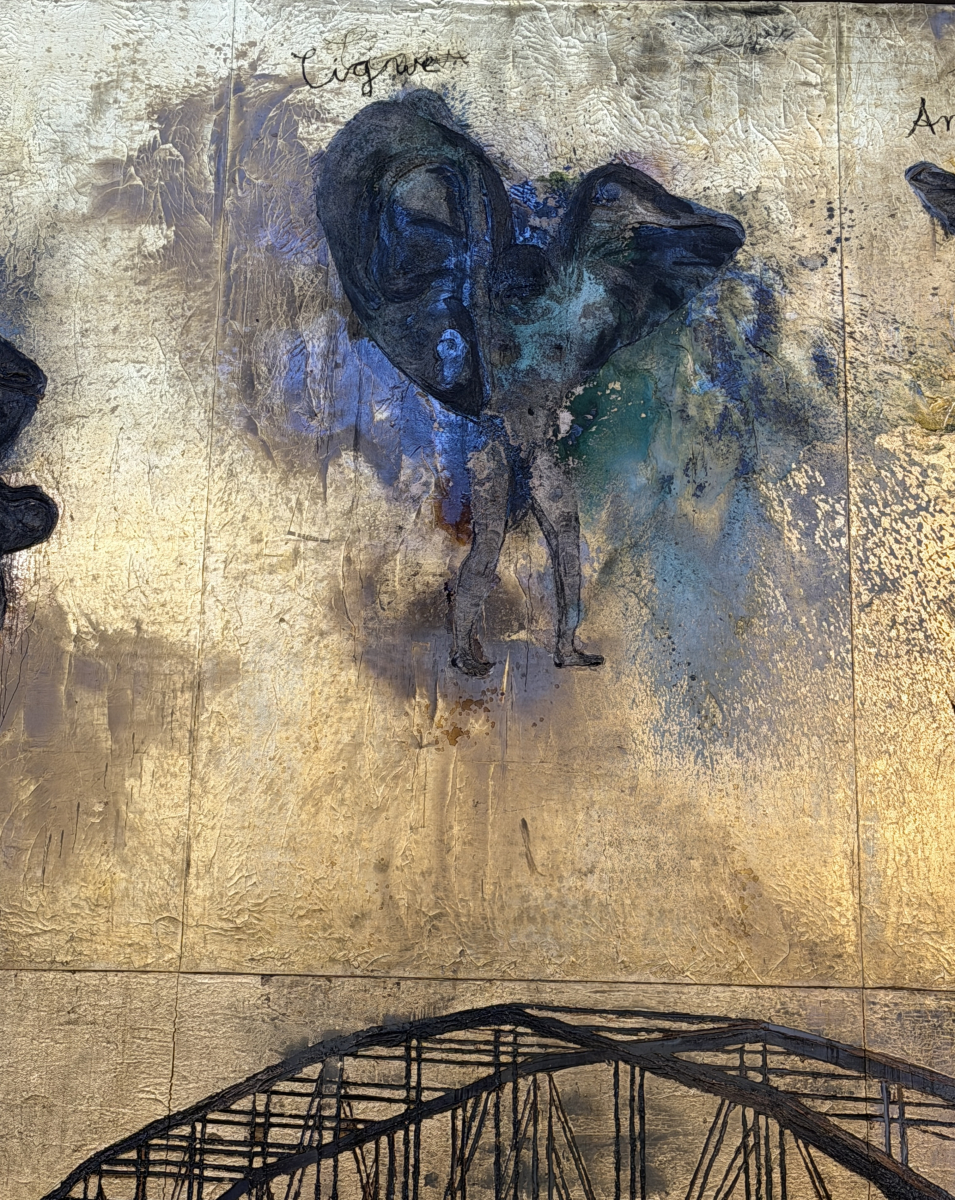
Across from this painting is another painting of Anselm on the Rhine River

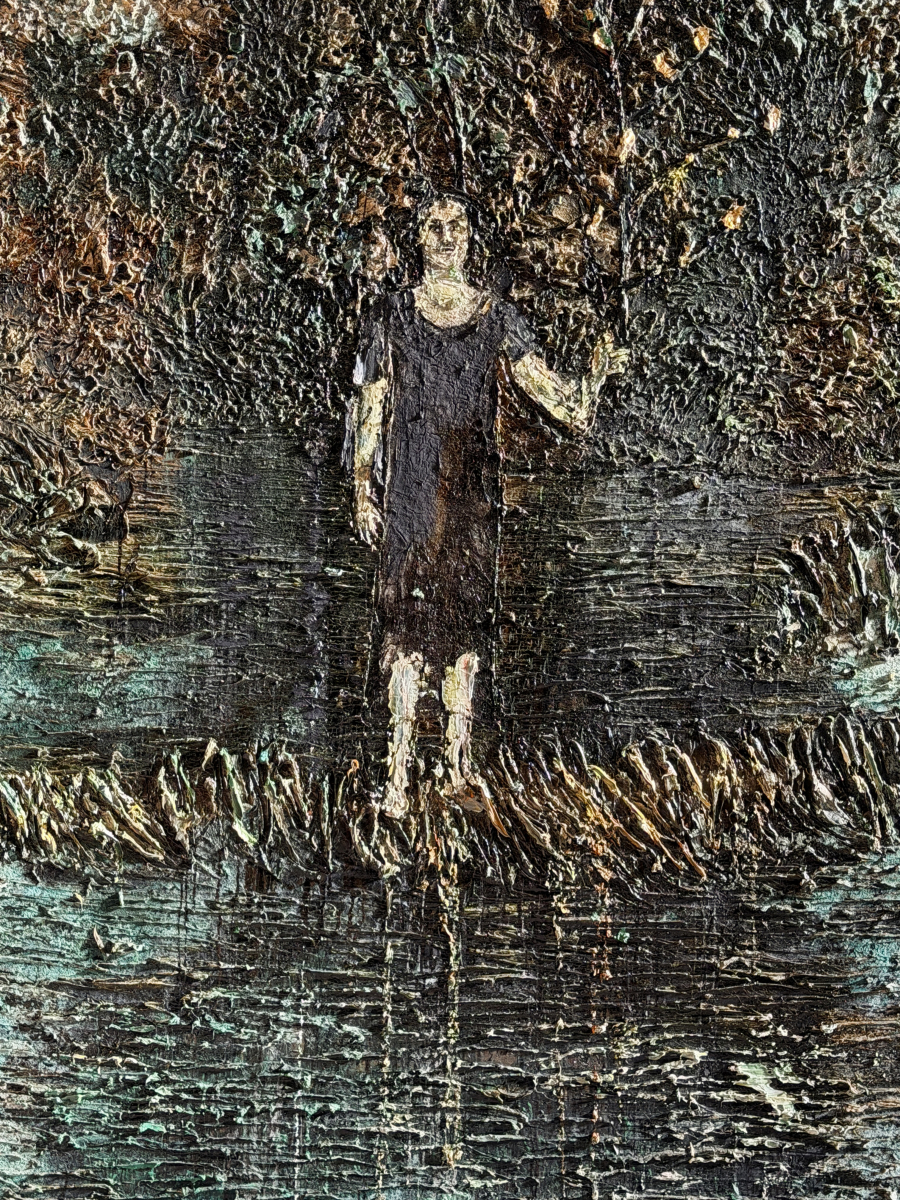
This show definitely represents a new vocabulary of light in his work. He has transitioned from lead material to gold (gold leaf). What prompted the transition? It often represents the alchemical "goal" or moment of spiritual illumination, but Kiefer insists the change is driven by how the materials behaves rater than a clean symboliic upgrade from guilt (lead) to redemption (gold). The gold is applied in a way that remains fractured and impure, so that it carries a strong physical presence and "weight" comparible to lead, rather than functioning a decorative surface.
Keifer describes his recent use of gold leaf as part of an "invented alchemy," where he uses processes like electrolysis and mixtures of media to transform gold itself into a new, less stable, more enigmatic substance.
The man and his work are immense and important. I am so honored to have followed his career all these years and there is no end in sight. What thought provoking work will he do next? I don't think I will have to wait too long....
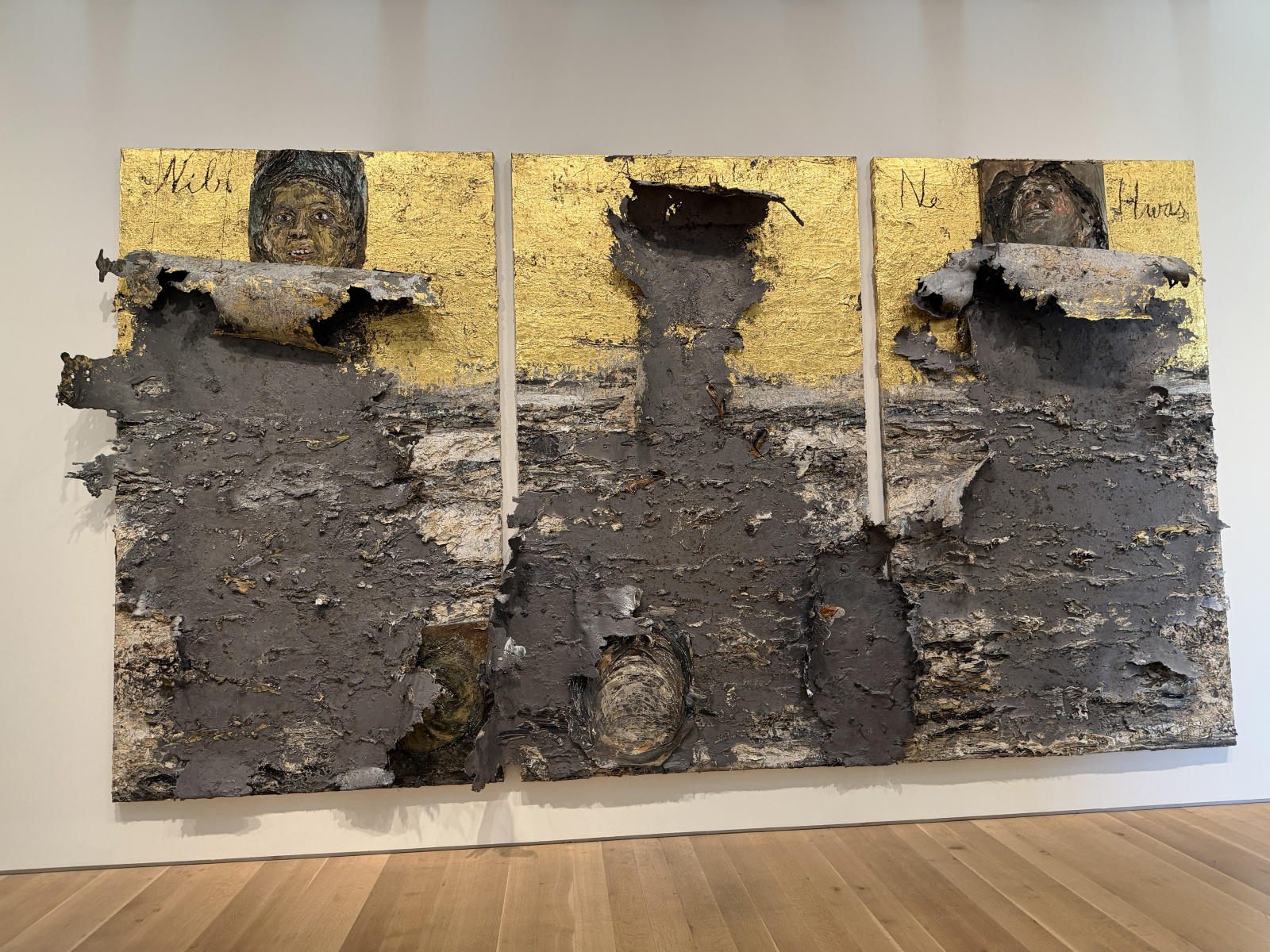
Keifer, St Louis, 2025

I plan to do another post on Anselm Kiefer on the Women series. Thank you for reading......kate
Becoming The Sea Exhibit, St. Louis https://youtu.be/FI96DMlhm2o?si=JOUqZd7s0O-QqT6_
A must see documentary. https://youtu.be/JYb4wDJKpsQ?si=9WsylQijFeMpUY5O
another https://youtu.be/2PyE8vwrTqg?si=FXo4-WzwtBWGwJv6
Interview with director of the documentary, Wim Wenders https://youtu.be/BeXlVkcFUZ8?si=4f8V7rEkKYIEKWnG


